Battle Bay
Rovio Entertainment OyAction
4.118.91K Reviews
- Version
- 5.4.5
- Installs
- 10.00M
- Age Rating
- Everyone 10+
Screenshots
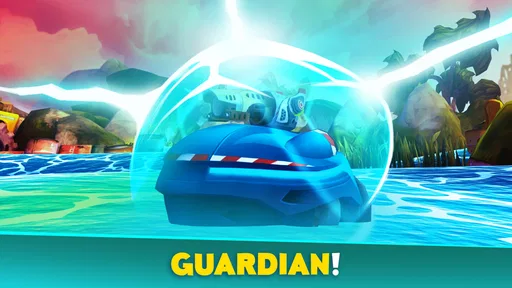
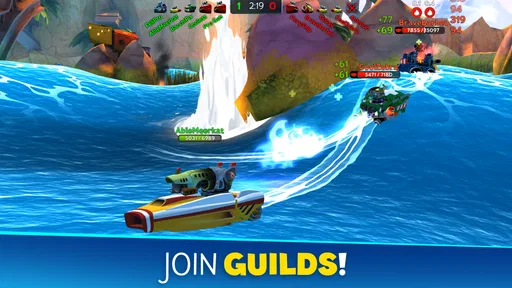
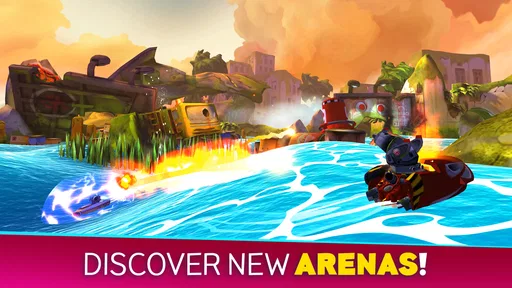
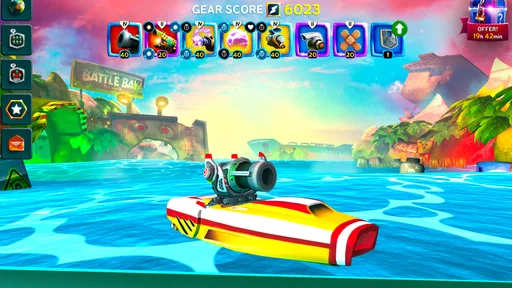
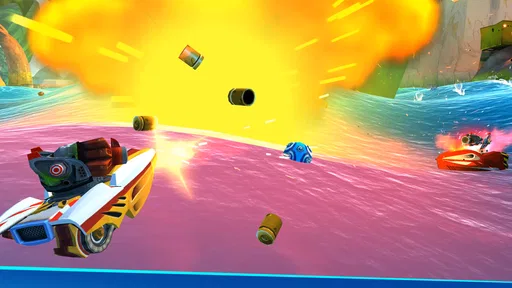
Our Review of Battle Bay
 Analysis by Appyee
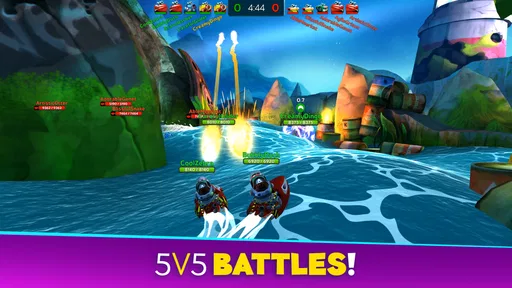
Battle Bay is the kind of action game I open when I want a match that feels immediate but still gives me room to think. Instead of putting me on a familiar battlefield, it places the fight on the water, where positioning, timing, and awareness matter as much as aiming. The central idea is easy to understand: teams of five boats face one another in short, energetic battles, and every movement can change the outcome.
That simple setup hides a surprisingly demanding game. I can rush forward and create pressure, but an exposed boat is easy to punish. I can stay near cover and wait for an opening, yet passive play may leave teammates outnumbered. The best moments come from balancing those choices rather than treating every encounter as a straightforward shooting match.
Developed by Rovio Entertainment Oy, this free action game has reached more than ten million installs and holds an average rating of 4.1 from roughly 427 thousand ratings. Those figures suggest a large, active audience, but they do not remove the need to decide whether its pace and competitive style suit me. It is rated Everyone 10+, runs from Android 7.1, and the current version is 5.4.5.
How Battle Bay feels in actual play
I find Battle Bay most engaging when I treat the opening moments as a choice about where to be, not just whom to attack. The boat’s route can leave room to retreat or put me in a position to help a teammate, and that decision shapes the rest of the encounter. Next, I’ll look at how the game makes those choices feel consequential as the fight unfolds.
Fast matches, but not mindless speed
My first impression is that Battle Bay moves quickly without becoming pure chaos. Boats accelerate, turn, and expose their sides in ways that make every approach meaningful. I rarely feel as if I am simply waiting for something to happen. Even while rethinking my route, I am watching the water, checking angles, and deciding whether to support a teammate or pursue an isolated opponent.
The speed is most noticeable when a battle begins. The opening move matters because the team that reaches a useful position first can control the direction of the fight. That does not mean charging is always correct. A quick advance can become a trap if several opponents have a clear view, while a measured turn around an obstacle can create a much safer attack.
This is where the game separates itself from many casual action titles. The controls are approachable, but the consequences of movement are not shallow. Turning too widely can expose the boat for longer than expected. Cutting across open water can make me an obvious target. I learned to think of movement as part of the attack rather than something I do only to reach the next target.
For a quick session, that combination works well. I can understand what is happening almost immediately, yet I still have something to improve after several matches. The game feels most satisfying when I stop chasing every visible opponent and start choosing fights based on distance, cover, and the position of the rest of my team.
What happens when the screen gets busy
The heavy-use moments arrive when several boats converge in one area. Projectiles, turns, retreats, and sudden changes in direction can make the battlefield difficult to read. I find these encounters exciting, but they also expose the difference between a calm decision and a panicked one. If I focus only on the nearest enemy, I can miss a second threat approaching from the side.
Team battles reward attention in layers. First, I need to know whether my boat is safe. Then I need to notice which opponent is already weakened, which teammate needs help, and whether moving forward will improve or damage our position. That mental load is part of the appeal, although it can feel demanding when I am playing casually or using a smaller screen.
A useful habit is to avoid entering the center of a crowded fight without a clear reason. Staying close enough to support an ally while keeping an escape route usually gives me more options than diving into the middle. I also try to pause after an attack rather than immediately repeating the same approach. The brief reset helps me see whether the enemy is baiting me into open water.
Another practical tip is to treat low health as a tactical warning, not merely a countdown. Retreating early can preserve a boat’s presence and allow a safer return, while staying for one more attack may turn a manageable situation into a lost position. This is especially important in team play, where surviving can matter more than securing a single target.
Reliability during ordinary sessions
In my experience, the game’s reliability is tied less to complicated menus and more to how consistently I can get into the action and understand the result of each exchange. The basic loop is direct: choose a battle, control the boat, react to the opposing team, and learn from the outcome. That clarity makes it easier to return after a break because I do not need to relearn an elaborate structure before playing.
The large player base is reassuring for anyone who wants a multiplayer action game rather than a solitary experience. Still, a popular game is not automatically the right choice for every player. The competitive nature means that some sessions feel rewarding and others feel frustrating, particularly when my own team loses control early and the rest of the battle becomes a recovery attempt.
That recovery process is one of the more important parts of the experience. A poor opening does not always decide everything. If I stop taking isolated risks, protect a stronger teammate, and focus on one manageable target, the match can become competitive again. On the other hand, recovery is difficult when everyone continues attacking separately. The game therefore rewards composure, but it cannot make uncoordinated team play disappear.
I would not describe every match as equally smooth emotionally. The short format encourages “one more game” behavior, especially after a close loss. That can be enjoyable, but it also makes the game a poor choice when I need something completely relaxing. The action is accessible; the competitive pressure is real.
Device expectations and practical limits
Because the listed minimum operating system is Android 7.1, the game is available to people using older Android software than many newer releases support. That broad compatibility is useful, particularly for anyone who does not own a recent phone. However, operating-system support alone does not tell me how comfortable the experience will be on every device.
Battle Bay asks me to react quickly while several animated objects share the screen. A device with a smaller display may make distant threats and crowded engagements harder to read. A phone that struggles with demanding games may also make precise steering less comfortable, even if it can install the app. I would judge the experience by sustained play rather than by whether the installation succeeds.
For an everyday scenario, imagine playing during a short break. The game is a good fit if I can give it focused attention and accept that a match may become intense quickly. It is less suitable if I need to look away often, because a few seconds of lost awareness can change my position and leave teammates unsupported. This is not a background game; it asks for active participation.
Resource demands are best understood through the visual density of a battle rather than through a claim about hardware performance. Calm moments are easier to follow, while clustered fights place more pressure on both the device and the player’s attention. I would close other demanding apps before a longer session on an older phone, not because the game promises a particular memory requirement, but because reducing distractions is sensible when responsiveness matters.
The free price also lowers the barrier to trying it, although the in-app purchase range runs from $0.99 to $99.99 per item. I see that as an important consideration for progression-minded players. The game can be approached without paying, but anyone tempted to speed up progress or purchase frequently should decide on a budget before getting invested. The free entry is attractive; the optional spending deserves deliberate limits.
How it compares with other action games
Compared with a standard arena shooter, Battle Bay gives movement on water a much larger role. The boat is not simply a character model running across a flat map. Direction, turning space, exposure, and approach angle shape the fight. I enjoy that extra layer because it makes positioning feel tangible rather than decorative.
Compared with slower strategy games, it is much more immediate. I am not spending a long time arranging a plan before seeing its consequences. Decisions happen during the encounter, and mistakes become visible quickly. Players who prefer careful planning without real-time pressure may find the action too demanding, while players who want instant control may appreciate the directness.
It also differs from purely casual mobile games because the team structure gives individual choices wider consequences. A reckless attack can remove one source of pressure for the whole team, while a well-timed retreat can preserve a useful ally. I would choose this over a simple score-chasing game when I want matches with tactical judgment. I would choose a less competitive alternative when I only want a quiet few minutes without the possibility of a frustrating defeat.
The water setting is more than a visual theme. It affects how I read space and makes routes feel different from the usual roads, platforms, or enclosed rooms found in other action games. That gives Battle Bay a recognizable identity, even when the broader idea of team combat feels familiar.
Who will enjoy it most
I recommend Battle Bay to players who like quick multiplayer battles but want positioning to matter. It suits someone who enjoys learning through repetition, notices patterns in opponents’ movement, and does not mind that improvement comes from better judgment rather than simply playing faster.
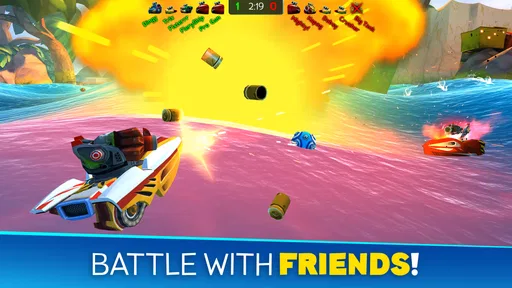
It is also a good match for friends who can discuss what went wrong after a battle. Even without turning every session into serious competition, talking about when to retreat, whom to support, or why an attack failed can make the game much more rewarding. The five-versus-five format gives teamwork enough importance to make communication useful.
I would be more cautious recommending it to someone who dislikes losing control of the outcome because of teammates. Individual skill matters, but it cannot fully compensate for a team that repeatedly separates or attacks without support. Players who want a guaranteed solo experience should look elsewhere in the action category.
It may also be a poor fit for anyone seeking a game that can be played while multitasking. The battles demand attention, and the most crowded moments punish distraction. The age rating of Everyone 10+ makes it approachable for a broad audience, but younger or less experienced players may still need time to understand why aggressive movement does not always produce better results.
Small habits that improve the experience
My first recommendation is to watch the shape of the fight before committing to a route. If several opponents are visible in one direction, taking a slightly wider path can preserve an escape option and create a better angle later. This sounds simple, but it prevents the common mistake of entering the most obvious lane just because it is the shortest.
Second, I try to identify the team’s immediate need rather than choosing a personal target automatically. Supporting a teammate under pressure can be more valuable than pursuing an opponent who is already retreating. This changes the game from a series of private duels into a shared battle, and it often produces better openings without requiring a risky charge.
Third, I use defeats as information about timing. If I was eliminated while crossing open water, the lesson may be about route selection rather than aim. If I lost while chasing a damaged opponent, the problem may have been tunnel vision. Separating those causes helps me improve faster than simply blaming the opposing team.
Finally, I would decide in advance how much I want to spend. Since the game is free but includes purchases from $0.99 to $99.99 per item, setting a personal limit keeps the competitive loop enjoyable. I prefer treating purchases as optional support for a hobby, not as a solution to every frustrating result.
My performance verdict
Battle Bay feels fast enough to keep short sessions lively, yet thoughtful enough that speed alone does not decide every encounter. Its strongest quality is the way boat movement turns ordinary team combat into a constant negotiation between attack and safety. I often finish a match knowing exactly which decision I would change next time.
Its limitations are equally clear. Crowded battles can become mentally busy, team dependence can make losses frustrating, and older or smaller devices may offer a less comfortable experience even when they meet the listed operating-system requirement. The free model is inviting, but the available in-app purchases mean I would approach progression with a spending plan.
The current version, 5.4.5, gives new players a straightforward entry point into a game that has been available since May 3, 2017. I would install it if I wanted an action game built around real-time boat combat, quick decisions, and repeated improvement. I would skip it if I wanted a fully solo adventure, a passive time-killer, or a competition-free experience.
My recommendation is positive with a clear condition: Battle Bay is at its best when I can give each battle my full attention. The combination of accessible controls, water-based positioning, and team recovery creates more depth than its simple premise suggests. It is not effortless entertainment, but for the right player, that demand is exactly what makes each close victory feel earned.
Verdict
Strengths of Battle Bay
- Fast-paced real-time battles are easy to learn but hard to master.
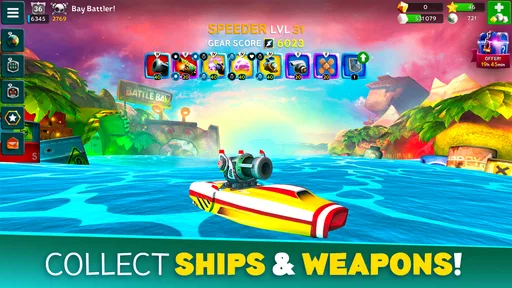
- Different boats and weapons support varied playstyles.
- Short matches fit well into quick gaming sessions.
- Team-based combat rewards coordination and tactical positioning.
- Bright visuals and lively animations make battles enjoyable.
Limitations of Battle Bay
- Progression can feel slow without regular play or purchases.
- Matchmaking may create uneven battles between player skill levels.
- Limited energy or resources can restrict extended play sessions.
- The interface can feel crowded on smaller phone screens.
- Random rewards may make upgrading preferred equipment unpredictable.
Other Releases by Rovio Entertainment Oy
View All
Angry Birds 2
Casual4.1

Angry Birds Friends
Arcade4.4

Angry Birds Transformers
Arcade4.7

Angry Birds POP Bubble Shooter
Casual4.5
Similar Picks in This Category
View All
Temple Run 2: Endless Escape
Imangi Studios4.1

PUBG MOBILE
Level Infinite4.3

Free Fire: 9th Anniversary
GARENA INTERNATIONAL I4.4

Talking Tom: Hero Dash Run
Outfit7 Limited4.3

slither.io
Lowtech Studios3.9

Sniper 3D:Gun Shooting Games
Wildlife Studios4.6
Frequently Asked Questions
What is Battle Bay and how does the gameplay work?
Battle Bay is a real-time multiplayer action game in which players control customizable boats and compete in team-based naval battles. Each match requires you to move, aim, and fire while working with teammates to capture objectives or destroy the opposing fleet. The controls are designed for mobile devices, but success depends heavily on positioning, timing, map awareness, and choosing the right weapons for each situation.
Is Battle Bay free to download and play?
Yes, Battle Bay can be downloaded and played for free on supported Android and iOS devices. However, the game includes optional in-app purchases that may provide currencies, upgrades, cosmetic items, or other progression-related benefits. You can enjoy regular matches without paying, although advancing certain boats and equipment may require patience because resources and upgrade materials are earned gradually through gameplay.
Does Battle Bay require an internet connection?
Yes, Battle Bay is primarily an online multiplayer game and requires a stable internet connection to play its main modes. Matches take place against other players in real time, so Wi-Fi or a reliable mobile data connection is recommended. Playing with a weak connection can cause lag, delayed controls, or disconnections, which may negatively affect both your experience and your team’s performance.
Can I play Battle Bay with friends?
Battle Bay supports social and team-based play, allowing you to interact with other players and participate in coordinated battles. Depending on the current version and available features, you may be able to invite friends, join a guild, or team up with other users for multiplayer matches. Playing with people you know can make communication and strategy easier, especially when selecting complementary boats and weapons.
Is Battle Bay suitable for beginners, and are there age-related concerns?
Battle Bay is relatively easy to start because its basic controls are straightforward, but becoming consistently successful takes practice. New players must learn how different boats, weapons, abilities, and maps work, while matchmaking may become more competitive over time. Parents should also be aware of online interactions, competitive elements, and optional purchases, and should review device settings or parental controls before allowing younger players to use the app.
Play our best games!


